Setting Family Boundaries by Rancho Cucamonga Therapist
Rancho Cucamonga Therapist Trauma Therapy CA EMDR CA Rancho Cucamonga counseling
This blog will focus on how to set boundaries in Latino families written by a Latina Rancho Cucamonga Therapist that focuses on helping Latina Women overcome Anxiety, Burnout and Trauma using EMDR Therapy in CA. Latino/x families are known for their warmth, closeness, and vibrant sense of togetherness. Many who grow up within these cultures cherish the deep connections, traditions, and sense of collective identity that shape daily life. However, the very strength that makes Latino/x families so resilient and loving their unity can sometimes blur the line between support and over-involvement. In a world where individual well-being and mental health are increasingly prioritized, learning to set healthy boundaries becomes an essential skill, especially within the context of tight-knit households.
Understanding the Cultural Context of Latino Families
Before delving into boundary-setting, it's important to recognize the cultural values that shape Latino family life. Concepts like familismo (the strong sense of loyalty and responsibility to family) create a unique social fabric. Family gatherings are lively and large, privacy is often secondary to togetherness, and children are taught from a young age to honor their elders.
While these values can foster sense of belonging and mutual support, they can also create challenges. Personal autonomy may be seen as selfishness, and asserting boundaries might be interpreted as disrespectful. The unspoken expectation is that family comes first always. For Latinos raised in USA or exposed to individualistic cultures, this can lead to a sense of being pulled in two directions: honoring tradition while seeking personal space. Click here to learn more about how familismo shows up in therapy.
What Do Healthy Boundaries Look Like?
Boundaries don’t have to be walls; they are bridges to healthier relationships. At their heart, boundaries are about communicating what is and isn’t acceptable in our interactions with others. Healthy boundaries allow us to preserve our sense of self, prioritize self-care, and avoid resentment, all while nurturing love and connection.
In Latino/x families, boundaries may involve:
· Asking for privacy around personal decisions, such as relationships or career choices.
· Defining limits around financial support, especially as adults.
· Establishing clear roles in care-giving for siblings, parents, or extended family members.
· Communicating how often and in what ways you wish to participate in family events.
· Expressing your need for alone time even if one feel guilty about this.
Common Challenges in Setting Boundaries
The journey to setting boundaries in Latino/x families can be full with emotional and cultural challenges. Here are a few common obstacles:
1. Fear of Disappointing Loved Ones
Many Latinos/x grow up internalizing the idea that their worth is tied to their family's well-being. Saying "no" can feel like a betrayal, even if it is necessary for personal health.
2. Guilt and Shame
Cultural narratives often reinforce the belief that children, especially daughters, must sacrifice for their families. Asserting needs and wants may trigger guilt or accusations of selfishness.
3. The Power of Tradition
Long-standing customs like visiting family every weekend, sharing income, or seeking parental approval for major decisions can make boundary-setting seem radical or disrespectful.
4. Navigating Multi-Generational Households
Living with parents, grandparents, or extended family can make privacy and autonomy especially challenging. Space is physical as much as it is emotional.
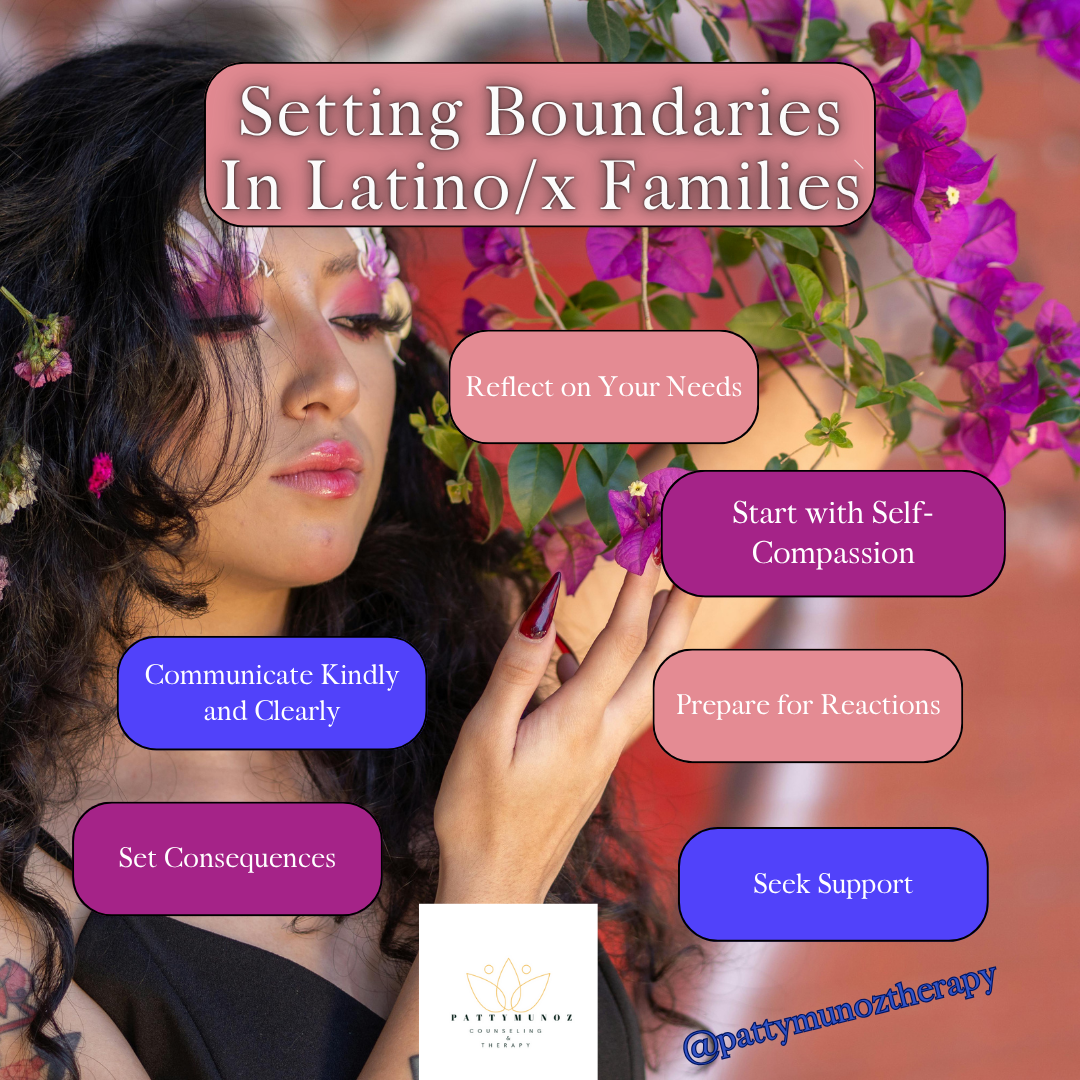
Setting Boundaries with Compassion. Despite the challenges, it is possible and healthy to set boundaries in a way that honors both your needs and your family. Here are some strategies:
1. Reflect on Your Needs
Ask yourself what you need to feel safe, respected, and at ease within your family. Journaling or speaking with a therapist can help clarify your feelings. To learn more about self-care and marianismo for latina read this blog.
2. Start with Self-Compassion
Remind yourself that setting boundaries is not an act of rebellion it's an act of self-love and respect. You need to self-care before you can care for anyone else. To learn more about self-care including self-compassion for trauma survivors click here.
3. Communicate Clearly and Kindly
Approach conversations with calm and respect. Use "I" statements to express your feelings and needs. For example: "I need some quiet time to recharge after work," or "I appreciate your advice, but I’d like to make this decision on my own."
4. Anticipate Reactions
Some family members may react with confusion, anger, or sadness. That's okay. Change can be uncomfortable, but consistency and kindness help build understanding over time.
5. Set Consequences (and Stick to Them)
If boundaries are crossed, calmly restate your needs and follow through with appropriate consequences. For example, if privacy is not respected, you might spend less time at home or step out for a walk.
6. Seek Support
Find allies siblings, cousins, or friends who understand and support your journey. Consider connecting with mental health professionals who are sensitive to Latino cultural values.
Creating Positive Change
Setting boundaries does not mean abandoning tradition. Instead, it can be a way to strengthen family ties by promoting honesty, respect, and harmony. When family members understand each other's needs, everyone benefits. Over time, Latino/x families can evolve to embrace both the collective and the individual, preserving what is beautiful about tradition while allowing each person to flourish.
As a Rancho Cucamonga therapist I often see that latino/x families have always been adaptive, creative, and resilient. As new generations navigate the balance between heritage and self-expression, setting boundaries becomes a powerful act of love not just for oneself, but for the entire family. By modeling healthy boundaries, you help future generations inherit not just your traditions, but also your tools for emotional wellness.