EMDR vs. Trauma Focused CBT from a Trauma Therapist CA
EMDR Counseling, Trauma Therapy CA , Spanish Speaking Therapist, Rancho Cucamonga Counseling, Therapist in Rancho Cucamonga
If you are exploring trauma therapy in CA, you may have come across two common approaches: EMDR therapy and Trauma Focused CBT ( TFCBT) .
It can feel confusing to sort through different therapy options, especially when you are already overwhelmed by anxiety, trauma symptoms, or burnout. You might find yourself wondering, “Which one works better?” or “How do I know which is right for me?”
As a Therapist in Rancho Cucamonga specializing in trauma and EMDR Counseling, I want to walk you through the differences in a way that feels clear, grounded, and empowering. There is no one-size-fits-all answer. The best therapy is the one that fits your nervous system, your history, and your goals.
What Is Trauma-Focused CBT?
Trauma-focused CBT, often called TF-CBT, is a structured form of Cognitive Behavioral Therapy designed specifically to address trauma symptoms.
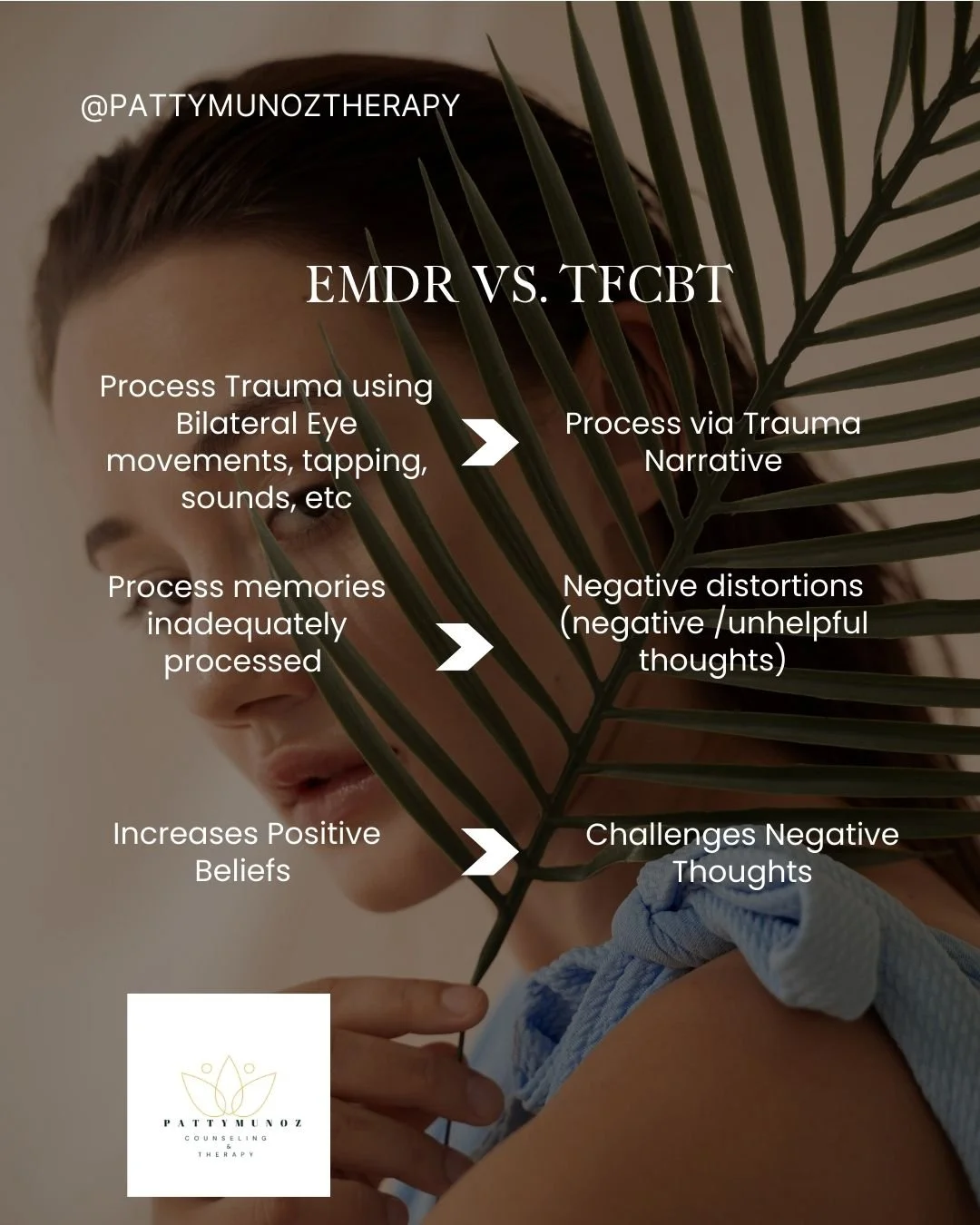
This approach focuses on the connection between thoughts, feelings, and behaviors. It helps clients identify unhelpful thought patterns related to trauma and gradually shift them toward more balanced and supportive perspectives. There is usually a trauma narrative where a person can tell their story and unhelpful thoughts are addressed in therapy.
Trauma-focused CBT often includes:
• Learning coping and grounding skills
• Understanding how trauma affects thoughts and emotions
• Gradually processing traumatic memories ( via narrative or other expression)
• Reframing negative beliefs about oneself or the world
This approach can be especially helpful for individuals who want a structured framework and practical tools for managing trauma-related anxiety.
What Is EMDR Therapy?
EMDR therapy, or Eye Movement Desensitization and Reprocessing, takes a different approach. Instead of focusing primarily on changing thoughts, EMDR works directly with how traumatic memories are stored in the brain and nervous system.
When trauma is not fully processed, memories can remain “stuck,” continuing to trigger emotional and physical reactions long after the event has passed. EMDR helps the brain reprocess those memories so they become less distressing.
Rather than analyzing thoughts in depth, EMDR focuses on activating the memory in a safe, structured way while engaging in bilateral stimulation, such as guided eye movements or tapping. Over time, the emotional intensity decreases and new, more adaptive beliefs emerge naturally.
As an EMDR therapist in California, I often work with clients who feel that they intellectually understand their trauma but still feel reactive in their bodies. EMDR can help bridge that gap between mind and body.
Key Differences Between EMDR and Trauma-Focused CBT
Both therapies are evidence-based and effective. The difference often lies in how they approach healing.
Trauma-focused CBT tends to be more cognitive and skill-based. It helps you identify distorted thinking patterns and replace them with healthier perspectives. It can feel structured and educational.
EMDR tends to be more experiential and body-based. It focuses less on debating thoughts and more on helping the brain process memories so that distress decreases naturally.
For some people, changing thoughts leads to emotional relief. For others, emotional relief must come first before thoughts shift.
Neither approach is better. They simply work differently.
Which Therapy Is Better for Anxiety?
If you are searching for an anxiety therapist in California, you may be wondering how these therapies address anxiety specifically.
Trauma-focused CBT can be very effective in helping you understand anxious thought patterns and learn coping strategies. If your anxiety is strongly linked to present-day stressors and cognitive distortions, this approach may feel helpful and practical.
EMDR therapy can be particularly powerful when anxiety is rooted in earlier experiences that shaped how safe or unsafe the world feels. By processing those foundational memories, many people notice that anxiety reduces without having to constantly challenge thoughts.
If your anxiety feels automatic, physical, or difficult to reason your way out of, EMDR can be worth exploring.
What About PTSD?
Both EMDR and trauma-focused CBT are widely recognized treatments for PTSD.
If you experience intrusive memories, hypervigilance, emotional numbness, or strong triggers, either approach could be supportive. The choice often depends on your comfort level with structure, your desire for cognitive tools versus memory processing, and your relationship to talking about trauma in detail.
Some clients prefer the structured roadmap of trauma-focused CBT. Others prefer EMDR because it does not require extensive verbal retelling of traumatic events.
You Do Not Have to Decide Alone
One of the most important things to remember is that you do not have to choose a therapy model by yourself.
A skilled trauma-informed therapist will assess your symptoms, history, and goals, then collaborate with you to determine the best approach. In some cases, elements of both therapies can be integrated.
As a Therapist in Rancho Cucamonga , I approach treatment with warmth, clarity, and flexibility. Therapy is not about fitting you into a method. It is about finding the method that fits you.
What Healing Ultimately Comes Down To
Whether through EMDR Counseling or trauma-focused CBT, the goal is the same. The goal is for you to feel safer in your own body. To have fewer triggers. To feel more regulated, more grounded, and more connected.
Healing is not about perfection. It is about reducing the intensity of trauma responses so you can move through your life with more ease.
If you are exploring trauma therapy and feeling unsure which direction to take, a conversation can help bring clarity.