Breaking Down EMDR Counseling from an Trauma Therapist CA
EMDR Counseling, Trauma Therapy CA , Spanish Speaking Therapist, Rancho Cucamonga Counseling, Therapist in Rancho Cucamonga
If you are searching for an EMDR Counseling in California, you may already feel exhausted from carrying anxiety, trauma, or emotional overwhelm on your own.
Many of the people I work with are high functioning. They have careers, families, responsibilities. From the outside, they appear fine. Internally, they feel tense, easily triggered, emotionally drained, or stuck in patterns they cannot think their way out of.
If you have tried traditional talk therapy and still feel reactive or overwhelmed, you might be wondering whether something deeper needs attention.
is one of the most effective treatments available for trauma and anxiety, especially when symptoms feel persistent or rooted in past experiences.
Let’s talk about what EMDR actually is, how it works, and what healing can look like.
What Is EMDR Therapy?
EMDR stands for Eye Movement Desensitization and Reprocessing. It is an evidence-based therapy designed to help the brain process distressing memories and experiences that are still affecting you in the present.
When something overwhelming happens, the brain sometimes does not fully process the experience. Instead of being stored as a past event, the memory remains “stuck” in the nervous system. This is why triggers can feel immediate and intense, even years later.
EMDR therapy helps the brain reprocess these memories so they lose their emotional charge. The event does not disappear, but it no longer feels like it is happening all over again.
As a Therapist in Rancho Cucamonga who specializes in EMDR Counseling, I use this approach to help clients reduce trauma symptoms, chronic anxiety, and long-standing emotional patterns.
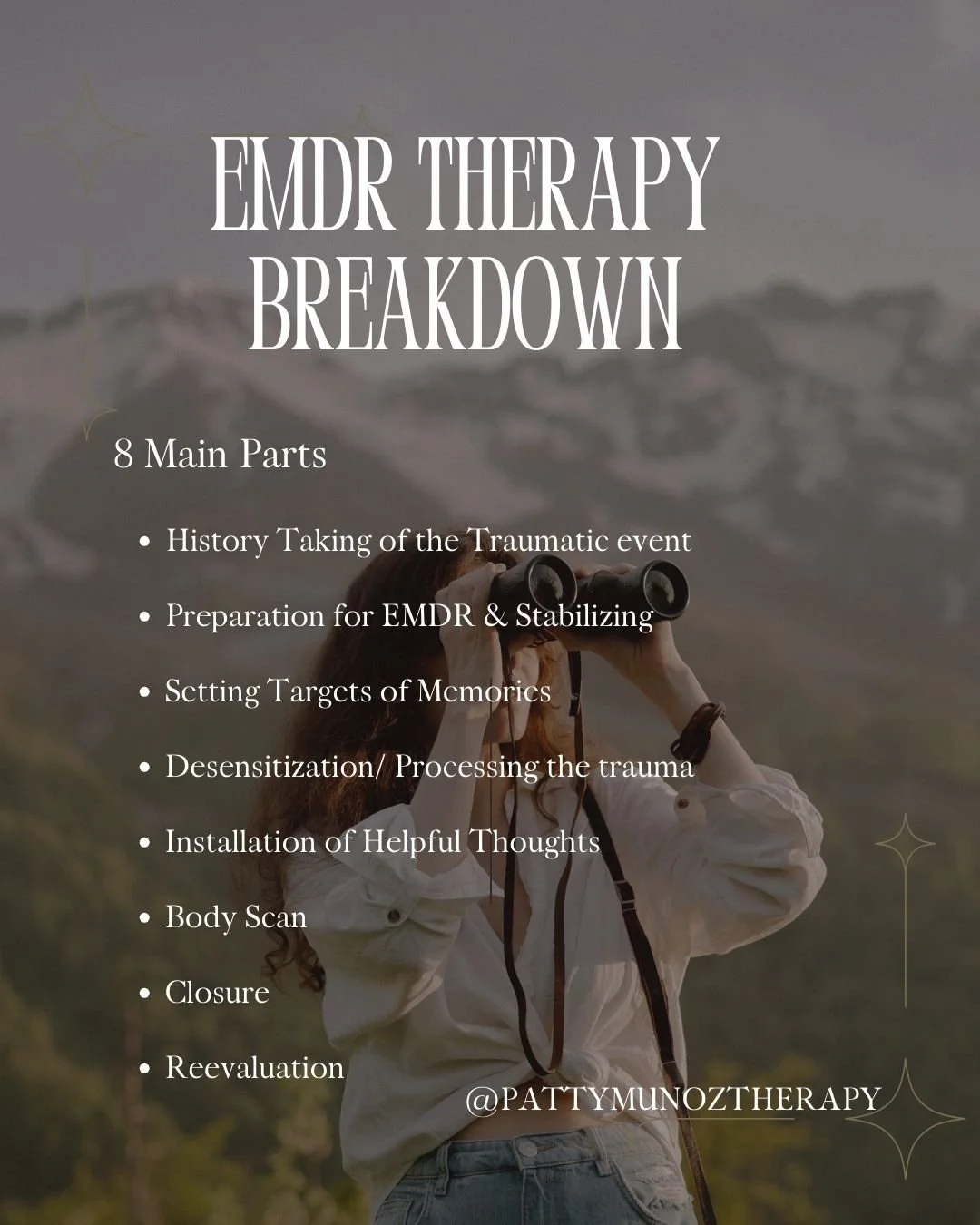
8 Main Parts of EMDR Therapy
History Taking of the Traumatic event
Preparation for EMDR & Stabilizing
Setting Targets of Memories
Desensitization/ Processing the trauma
Installation of Helpful Thoughts
Body Scan
Closure
Reevaluation
How EMDR Helps With Trauma
Trauma often shows up as intrusive memories, hypervigilance, emotional numbness, irritability, or feeling constantly on edge. Many people normalize these symptoms, assuming this is just how they are wired.
EMDR works directly with the way trauma is stored in the brain and body. Through structured phases of treatment, we identify distressing memories or experiences that continue to activate your nervous system. Using bilateral stimulation, such as guided eye movements or tapping, the brain begins to process these experiences in a more adaptive way.
Over time, clients often notice:
• Reduced emotional intensity around past events
• Fewer intrusive thoughts or triggers
• Increased emotional regulation
• Greater sense of calm in the body
• More flexibility in how they respond to stress
You remain in control throughout the process. EMDR is collaborative and paced according to your readiness.
How EMDR Supports Anxiety Treatment
Many people seeking an anxiety therapist in California are surprised to learn that their anxiety is connected to unresolved experiences from the past.
Anxiety can develop when the nervous system has learned that the world is unpredictable or unsafe. Even if current life circumstances are stable, the body may still respond as if danger is present.
EMDR therapy can help address the root causes of anxiety by processing the earlier experiences that shaped these patterns. Rather than only teaching coping skills, EMDR supports deeper nervous system regulation.
Clients often report that situations that once triggered intense worry or panic begin to feel manageable. There is more space between stimulus and response. Anxiety becomes less automatic.
What EMDR Sessions Actually Feel Like
One of the biggest misconceptions about EMDR therapy is that it requires reliving trauma in detail. In reality, EMDR does not require you to share every aspect of your experience out loud.
8 Main Parts of EMDR Therapy
History Taking of the Traumatic event
Preparation for EMDR & Stabilizing
Setting Targets of Memories
Desensitization/ Processing the trauma
Installation of Helpful Thoughts
Body Scan
Closure
Reevaluation
Sessions are structured and begin with building safety and stabilization. We identify resources and grounding tools before processing any distressing memories. This ensures that you feel supported and regulated throughout the work.
During processing, you briefly focus on aspects of a memory while engaging in bilateral stimulation. Your brain does much of the work naturally. Many clients describe the experience as surprisingly gentle or even relieving.
As a Latina therapist serving Rancho Cucamonga and clients across California, I approach EMDR with warmth and cultural sensitivity. Your pace and your comfort matter.
EMDR Versus Traditional Talk Therapy
Traditional talk therapy can be incredibly helpful for insight, emotional support, and learning coping strategies. However, when trauma symptoms persist, insight alone may not fully resolve them.
This is because trauma is stored not only in thoughts but also in the nervous system.
EMDR therapy goes beyond cognitive understanding and works directly with how memories are encoded in the brain. For many clients who feel stuck despite years of therapy, EMDR offers a new pathway toward relief.
It is not about choosing one approach over another. It is about finding the right tool for the symptoms you are experiencing.
Who Is a Good Fit for EMDR Therapy?
EMDR can be helpful for individuals experiencing:
• PTSD or trauma symptoms
• Chronic anxiety
• Panic attacks
• Phobias
• Burnout connected to long-term stress
• Disturbing memories that feel unresolved
You do not need a formal PTSD diagnosis to benefit from EMDR. If past experiences continue to shape how you feel today, that is enough reason to explore support.
If you are unsure whether EMDR is right for you, a consultation can help clarify options.
Healing Is Possible
Many people begin EMDR therapy feeling skeptical. They have lived with anxiety or trauma for years and assume this is permanent.
The nervous system is capable of change. With the right support, memories can become less distressing. Triggers can lose intensity. Your body can learn what safety feels like again.
If you are looking for an EMDR therapist in California who understands trauma and anxiety, you do not have to navigate this alone.
I offer a free 15-minute phone (909) 206-4613 consultation so you can ask questions, or contact me here info@pattymunoztherapy.com to determine whether EMDR therapy feels like the right next step
You deserve more than coping. You deserve relief, clarity, and a nervous system that feels steady.