EMDR Counseling, Trauma Therapy CA , Spanish Speaking Therapist, Rancho Cucamonga Counseling, Therapist in Rancho Cucamonga
If you are a Latina daughter who has stepped back from your family, you may know a very unique pain. You may feel relief and grief in the same breath. You may feel proud of the boundary you set and ashamed that you had to set it at all.
I'm Patty Muñoz, a Latina therapist in Rancho Cucamonga, and I sit with women in this exact place. I want you to know first: you are not broken, you are not ungrateful, and you are not alone, even if it feels that way.
What does it mean to go no contact or limited contact with family?
No contact means there is no communication at all. No visits, no calls or texts, no social media, no virtual contact of any kind.
Limited contact means some communication remains, but it is kept minimal and intentional. That might look like seeing family only at large gatherings, texting about logistics, or staying in touch with certain relatives while stepping back from others. The purpose is usually the same: protecting your well-being.
Neither choice is made lightly. Most of the women I work with arrive at it after a long, painful road.
The challenges nobody warns you about
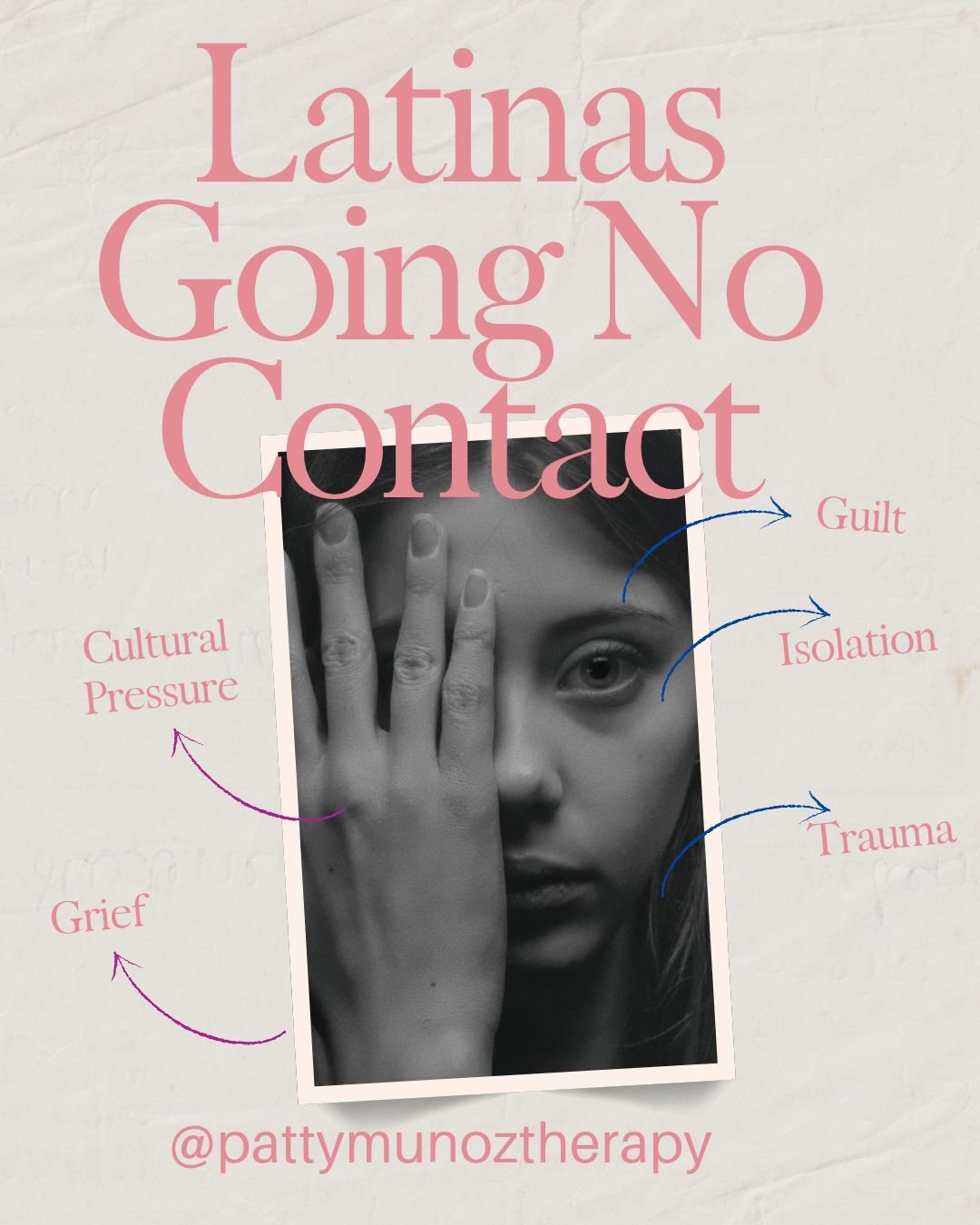
Cultural pressure. In many Latinx families, familia comes first, often before the needs of any one person. Values like loyalty, respect, and sacrifice can be beautiful. They can also make it very hard to say, "This relationship is hurting me."
Guilt and misunderstanding. Other relatives may not understand or support your decision. You might hear that you're being dramatic, selfish, or "turning your back on your own blood." That guilt can follow you for years.
Isolation. If you are the first in your family to go no contact or limited contact, it can feel like you are the only one who has ever set a boundary like this. Being the first often means doing it without a map, and without anyone who says, "I get it."
How does this show up in Latinx families?
Every family is different, and there is no single story. But here are some patterns I have seen in my work as a trauma therapist.
After years of trying to repair the relationship. Many estranged Latinas do not begin with distance. They begin with effort: honest conversations, countless second chances, hoping this time things will change. Sometimes repair isn't possible, and choosing limited or no contact becomes the healthiest option left.
When trauma has gone unhealed in the family. Pain that was never named or treated tends to get passed down. When a daughter starts to heal, the family system can push back, because change disrupts the way things have always been.
When a Latina learns to set boundaries for her own mental health. Sometimes distance isn't about a single breaking point. It is about a woman finally learning that her peace matters, and acting on it.
None of these paths mean you stopped loving your family. Many women I work with love them deeply. They simply can't stay safe or well in the relationship as it is.
What is the mental health impact, and why do estranged daughters and other Latinas seek therapy?
Estrangement touches almost every part of life. In my Rancho Cucamonga counseling practice, estranged daughters typically come in for one or more of these reasons:
1. Grief over the family they hoped for. This is a real loss, even though the people are still living. You may be mourning the mother who never showed up the way you needed, holidays that feel empty, or the future you imagined. This kind of grief is often unrecognized by others, which can make it even heavier.
2. Healing unprocessed trauma. Many women come to work through what happened in their families: neglect, emotional abuse, physical abuse, or sexual abuse. When these experiences stay unprocessed, they can show up as anxiety, triggers, numbness, or self-doubt. The main therapy I used for processing trauma in EMDR Therapy, visit my main EMDR counseling page to learn more.
3. Burnout from over-giving. Many daughters, especially the eldest or the "responsible one," spent years overextending themselves, caretaking, fixing, and keeping the peace. By the time they reach therapy, they are often exhausted, depressed, or anxious, and unsure who they are outside of that role. To learn more about managing burnout and how Latinas can heal visit my Burnout Page.
How trauma therapy and EMDR can help
You don't have to carry this alone, and you don't have to relive every detail to heal. Trauma therapy in CA gives you a steady, private space to make sense of your story at your pace.
One approach I use is EMDR (Eye Movement Desensitization and Reprocessing). EMDR therapy in CA is a well-researched method that helps the brain process painful memories so they feel less overwhelming. Many women find it helpful for old family wounds that still feel fresh in the body. Whether EMDR is the right fit for you is something we would decide together.
What working with me looks like
Therapy with me is grounded, warm, and culturally attuned. I understand what it means to hold love, loyalty, and pain together. I understand the weight of "¿Qué va a decir la gente?" And I won't ask you to choose between your culture and your healing. I honor both.
I won't tell you whether to reconnect with your family or stay distant. That decision is yours. My role is to help you feel clear, supported, and less alone in whatever you choose.
Ready to talk?
If you're looking for a therapist in California who understands the complexity of family, culture, and estrangement, I would be honored to support you. Whether you need space to grieve, heal trauma, or finally rest from years of over-giving, you deserve care that sees all of you.
Schedule a free consultation here | Call 909-206-4613 |
E-mail info@pattymunoztherapy.com
Patricia “Patty” Munoz, LMFT 77160 provides trauma therapy, EMDR, and counseling for Latina women in Rancho Cucamonga and virtually throughout California.